
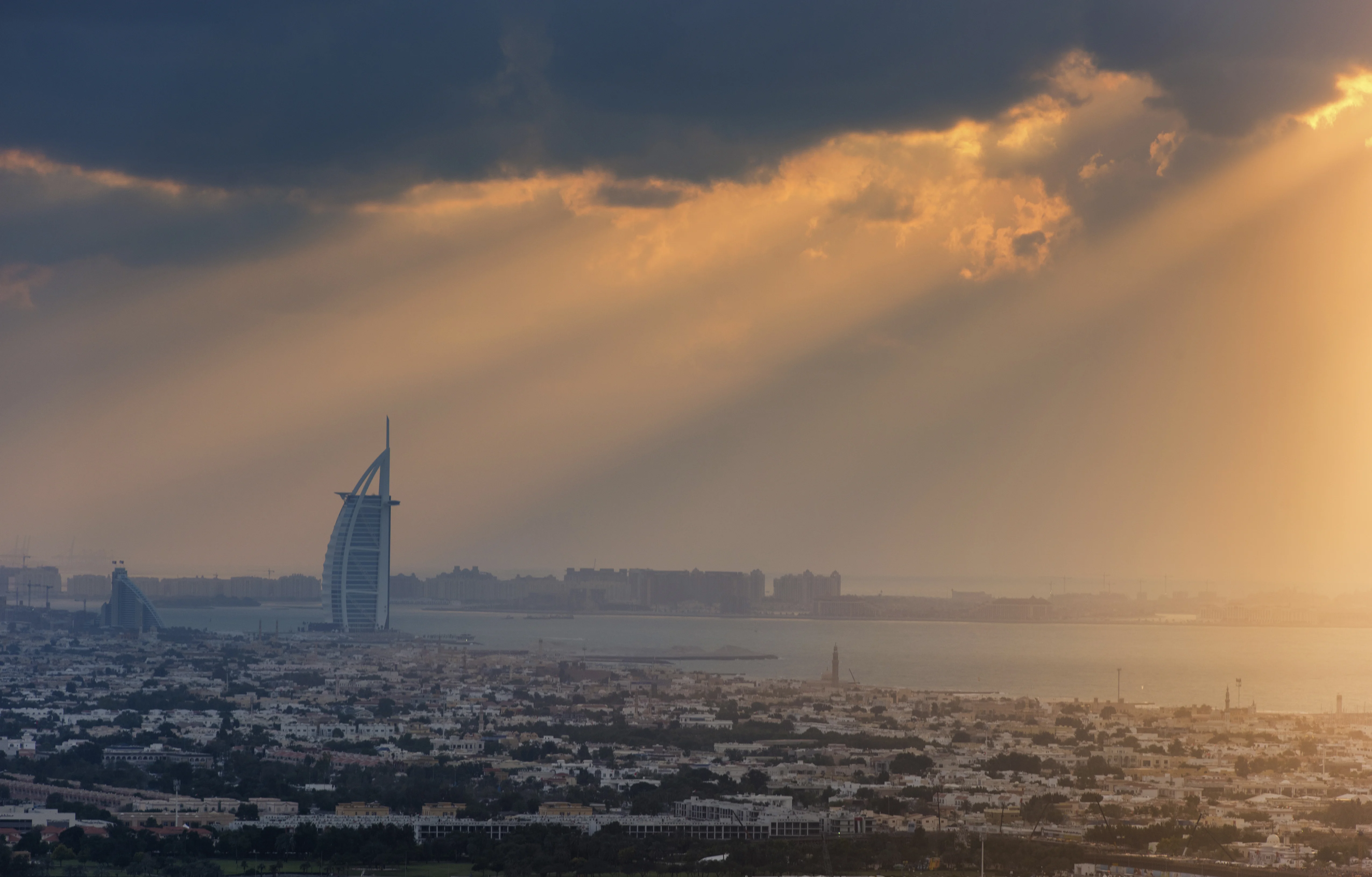
Dubai Property Market 2025: Record AED 686.8 Billion Sales, But the Real Story Is Deeper

Quick Answer
Dubai’s property market delivered its strongest annual sales performance in 2025, recording AED 686.8 billion in sales across 215,736 transactions. Transaction value increased 30.9% year-on-year, while transaction volume rose 18.7%. The original source article highlights that off-plan dominated activity, resale showed stronger price growth per square foot, and most upcoming supply remains in early construction stages.
But the real story is not just that Dubai broke records.
The real story is that Dubai’s property market is becoming deeper, more liquid, more segmented, and more sophisticated. Off-plan is driving volume, ready properties are showing stronger scarcity value, rental yields remain attractive, and future supply is large but not all immediately deliverable.
Key Takeaways
• Dubai recorded AED 686.8 billion in property sales in 2025, the highest annual sales value on record according to data sourced from Dubai Land Department records.
• Sales volume reached 215,736 transactions, up 18.7% year-on-year.
• Off-plan accounted for the majority of activity, supported by payment plans, developer launches, and investor demand.
• Resale properties recorded stronger price growth per square foot, showing continued demand for completed homes in established areas.
• Dubai’s full real estate sector crossed AED 917 billion in total transaction value across more than 270,000 transactions in 2025, based on Dubai Government reporting.
• Rental yields remained attractive compared with many global cities, with many Dubai communities generally sitting around the 6% to 8% range depending on area and property type.
Why 2025 Was a Historic Year for Dubai Real Estate
Dubai did not simply have a strong year. It had a record-setting year.
The market reached AED 686.8 billion in property sales, supported by high transaction activity, strong investor participation, population growth, and continued confidence in Dubai as a long-term global real estate destination.
At the wider real estate sector level, Dubai’s Government reported more than 270,000 total real estate transactions worth over AED 917 billion in 2025, marking a 20% year-on-year increase in total transaction value.
This matters because it shows that the market growth was not only about luxury headlines or a few trophy sales. It was broad enough to lift overall transaction value, transaction volume, off-plan activity, resale liquidity, rental demand, and developer performance.
For investors, this confirms one important point: Dubai is no longer behaving like a short-term speculative market only. It is becoming a more mature real estate market with multiple demand layers.
What Drove Dubai Property Growth in 2025?
The 2025 growth was not caused by one factor. It came from several forces working together.
1. Population growth continued to support housing demand
Dubai’s population growth remains one of the strongest foundations behind real estate demand. More residents means more demand for rentals, ownership, services, schools, offices, and lifestyle communities.
This is important because property markets become healthier when demand is supported by actual residents, not only short-term investors.
Dubai continues to attract:
• Business owners
• High-net-worth individuals
• Skilled professionals
• Remote workers
• Entrepreneurs
• Families relocating for safety and lifestyle
• Regional and international investors
This creates demand across multiple segments, from studios in high-yield areas to luxury villas in prime communities.
2. Off-plan remained the main engine of transaction volume
Off-plan dominated Dubai’s transaction activity in 2025.
According to the source article, the primary market recorded:
• 149,290 off-plan transactions
• AED 448.1 billion in total value
• 69% of total transaction volume
• 65% of total market value
Other 2025 market reporting also points to off-plan making up a very large share of sales activity, with Cavendish Maxwell reporting that off-plan accounted for 72.9% of total sales activity in 2025.
This shows how powerful the developer market became.
Why did off-plan perform so strongly?
• Flexible payment plans made entry easier
• Developers launched aggressively in high-demand corridors
• Investors preferred staged payments instead of full upfront capital
• New communities attracted buyers looking for future growth
• Branded residences and lifestyle projects created emotional demand
• International buyers continued to see Dubai as a safe, high-growth market
Off-plan was not just popular because prices were rising. It was popular because the product, payment structure, and investor psychology all aligned.
3. Resale had lower volume but stronger price appreciation
The resale market did not match off-plan volume, but it delivered stronger price growth per square foot.
According to the source article, resale recorded:
• 66,446 resale transactions
• AED 238.8 billion in total value
• 8% year-on-year transaction growth
• 11.3% year-on-year price growth per square foot
• Stronger price growth than primary market, which recorded 6.7% price growth per square foot
This is extremely important.
Off-plan tells us where buyers are placing future bets.
Resale tells us where people are willing to pay today.
When resale prices rise strongly, it usually reflects scarcity in completed properties, end-user demand, rental pressure, and confidence in established communities.
That means the ready market remained highly relevant in 2025, even though off-plan dominated transaction volume.
Primary vs Resale Market: What the Numbers Really Mean
The primary and resale markets told two different stories in 2025.
Primary market story
The primary market was about scale, payment flexibility, and future growth.
Developers were able to sell large volumes because buyers were attracted to:
• Lower initial payment requirements
• Post-handover payment plans
• New master communities
• Branded residences
• Modern amenities
• Long-term capital appreciation potential
Resale market story
The resale market was about scarcity, live usability, and rental income.
Completed properties performed well because buyers could:
• Move in immediately
• Rent immediately
• Use mortgage financing more clearly
• Compare actual building quality
• Evaluate real service charges
• Check actual tenant demand
• Avoid construction delivery risk
This is why resale price appreciation per square foot matters. It shows that buyers were still willing to pay for completed supply, especially in prime and established communities.
The Five-Year Transformation: From Recovery to Global Market
Dubai’s 2025 performance becomes even more powerful when compared with 2020.
The source article states that Dubai property sales increased from AED 71.5 billion in 2020 to AED 686.8 billion in 2025, representing cumulative growth of 861%. Transaction volumes also increased 521%, while average prices per square foot rose 60%, from AED 1,170 to AED 1,866.
This is not a normal recovery.
This is a structural transformation.
Dubai moved from a post-correction recovery phase into a global capital magnet phase. The market became larger, more liquid, and more internationally visible.
This transformation was supported by:
• Long-term residency reforms
• Strong infrastructure delivery
• Tax advantages
• Safety and lifestyle appeal
• Global wealth migration
• Business-friendly policies
• International investor confidence
• Strong rental returns
• Continued demand from both residents and investors
The result is a market that now competes not only regionally, but globally.
Supply Pipeline: Big Numbers, But Delivery Timing Matters
One of the biggest questions for 2026 and beyond is supply.
The source article states that Dubai had 1,464 residential projects under construction by the end of 2025, representing 452,101 units with an estimated development value of AED 359.4 billion.
At first glance, this sounds like heavy future supply.
But the construction stage matters more than the headline number.
According to the article:
• 65% of units are only 0% to 20% complete
• 12% are 21% to 40% complete
• 23% are above 40% complete
This means a large portion of the pipeline is not immediate supply. Many of these units are more likely to affect the market in 2027 and 2028 rather than all arriving in 2026.
That is why investors should not simply say, “Dubai has too much supply coming.”
The smarter question is:
• Which communities have supply coming?
• What type of units are being delivered?
• Are they studios, one-bedrooms, family apartments, townhouses, or villas?
• Are they affordable, mid-market, luxury, or ultra-luxury?
• Are projects actually progressing on schedule?
• Will the delivered stock match real demand?
Supply risk is not citywide. It is community-specific.
Where the Market Was Most Active in 2025
According to the source article, the highest activity areas by transaction value included:
• Business Bay
• Dubai Marina
• Dubai South
• DAMAC Islands
• Jumeirah Village Circle
By transaction volume, Jumeirah Village Circle recorded the highest number of transactions, exceeding 18,000 deals in 2025.
This shows two important patterns.
First, established investor communities such as Business Bay, Dubai Marina, and JVC remained highly liquid.
Second, southern Dubai continued gaining attention, especially Dubai South, supported by long-term infrastructure, airport expansion themes, and future growth expectations.
For investors, this means Dubai’s growth is no longer concentrated only around the traditional prime zones. The city is expanding outward, and new investment corridors are becoming more important.
Developer Performance: Volume and Value Tell Different Stories
Developer rankings can look very different depending on whether you measure units sold or transaction value.
According to the source article, by transaction volume:
• Binghatti recorded approximately 17,000 units
• DAMAC recorded approximately 15,000 units
• Emaar recorded approximately 13,000 units
By transaction value:
• Emaar led with AED 66 billion
• DAMAC followed with AED 36 billion
• Binghatti recorded AED 26 billion
• Nakheel and Sobha followed in the low AED 20 billion range
This does not mean one developer is simply “better” than another. It means their product strategies differ.
Some developers drive volume through affordable and mid-market apartment sales. Others dominate value through premium communities, luxury units, larger layouts, and stronger brand pricing.
For buyers, the developer name matters, but the project fundamentals matter more.
A strong investment should be judged by:
• Entry price
• Payment plan
• Location
• Developer delivery record
• Future supply nearby
• Expected rental demand
• Service charges
• Floor plan efficiency
• Resale liquidity
• Handover timeline
Rental Market: The Foundation Behind Investor Confidence
Sales records are important, but rental demand is what gives investors confidence.
The source article states that Dubai recorded 405,000 rental transactions in 2025, including 192,000 new contracts and 213,000 renewals.
Median annual apartment rents were reported as:
• Studio: AED 46,000
• One-bedroom: AED 72,000
• Two-bedroom: AED 115,000
• Three-bedroom: AED 200,000
Median villa rents were reported as:
• Three-bedroom villa: AED 160,000
• Four-bedroom villa: AED 244,000
• Five-bedroom villa: AED 425,000
Palm Jumeirah villas reached a median annual rent of AED 1.49 million, with 24.2% year-on-year growth.
This rental strength is one reason investors remained active.
Dubai continues to offer attractive rental yields compared with many mature global cities. Multiple market sources place average Dubai rental yields around the mid-to-high 6% range, with apartments generally outperforming villas in yield terms.
For investors, the key is not only capital appreciation. It is the combination of:
• Rental income
• Liquidity
• Tax efficiency
• Currency stability
• Tenant demand
• Long-term population growth
• Exit options
That combination is why Dubai remained attractive in 2025.
Is Dubai Property Still a Good Investment After a Record Year?
The answer is yes, but not blindly.
Dubai property remained attractive in 2025 because the market had strong sales liquidity, strong rental demand, and continued population-driven housing needs.
But after a record year, investors must become more selective.
The easy phase of buying almost anything and watching it rise is becoming more difficult. The next phase will reward investors who understand data, supply, product quality, and community-level demand.
A good 2026 investment should have:
• Strong rental demand
• Real end-user appeal
• Good entry price compared with recent transactions
• Limited direct competition
• Strong developer reputation
• Practical layout
• Reasonable service charges
• Clear exit liquidity
• Infrastructure upside
• Strong handover or resale timeline
The market is still strong, but selection matters more.
What Buyers Should Watch in 2026
Dubai enters 2026 with strong momentum, but the market is becoming more analytical.
Buyers should watch:
• Whether off-plan sales remain dominant
• Whether resale price growth continues
• Whether rental growth slows or stabilizes
• Which communities receive the most new supply
• Whether handovers are delayed or delivered on time
• Whether mortgage buyers become more cautious
• Whether developers increase incentives
• Whether secondary market sellers become more flexible
The most important signal in 2026 will not be one headline number. It will be the relationship between supply, rents, transaction volume, and buyer urgency.
CBA Real Estate Market View
At CBA Real Estate LLC, our view is that Dubai’s 2025 performance confirms the city’s long-term strength, but also marks the beginning of a more selective market cycle.
The headline number of AED 686.8 billion is impressive, but the deeper signals matter more.
Off-plan is still powerful.
Resale is still valuable.
Rental demand is still strong.
Supply is coming, but timing and location matter.
Investors are still active, but becoming smarter.
The winners in 2026 will not be the people who follow headlines. The winners will be the people who read the market by community, project, supply stage, rental yield, and exit liquidity.
Dubai is still one of the world’s strongest real estate markets, but the next phase belongs to informed buyers.
FAQs
How much property was sold in Dubai in 2025?
Dubai recorded AED 686.8 billion in property sales across 215,736 transactions in 2025, according to data sourced from Dubai Land Department records.
Was 2025 a record year for Dubai real estate?
Yes. 2025 was Dubai’s strongest recorded year for property sales value, with sales reaching AED 686.8 billion. Dubai’s broader real estate sector also crossed AED 917 billion in total transaction value across more than 270,000 transactions.
What drove Dubai property market growth in 2025?
Growth was driven by population expansion, strong investor demand, off-plan launches, flexible payment plans, rental demand, and continued confidence in Dubai as a global real estate destination.
Did off-plan or resale perform better in 2025?
Off-plan dominated transaction volume and value, but resale showed stronger price growth per square foot. This means off-plan drove activity, while completed properties showed scarcity value and strong buyer demand.
Are Dubai rental yields still attractive?
Yes. Dubai rental yields remained attractive in 2025, with many communities generally offering yields in the 6% to 8% range depending on location, unit type, and purchase price.
Is too much supply coming to Dubai?
Dubai has a large supply pipeline, but not all of it is immediate. The source article notes that 65% of under-construction units were still only 0% to 20% complete, meaning much of the supply pressure may be more relevant for 2027 and 2028 than for immediate delivery.
Is Dubai property still a good investment in 2026?
Dubai property can still be a strong investment in 2026, but investors should be selective. The best opportunities will depend on entry price, rental yield, community supply, developer quality, payment plan, and resale liquidity.